
“100% Localized Agricultural Drone Secures Both Supply Chain and Technological Sovereignty”
May 08, 2026 (Fri) 20:57:40
Reporter Hwang Tae-il hti@newsmaker.or.kr
As automation and unmanned technologies are rapidly expanding in the agricultural sector along with the Fourth Industrial Revolution, the importance of agricultural drones is gradually increasing. Drone-based pest control, seeding, and crop growth monitoring have already become key tools for improving efficiency and productivity in the field. However, despite such growth, the domestic agricultural drone industry has long faced a fundamental limitation in the form of dependence on foreign-made components.
Reporter Hwang Tae-il hti@
In particular, a considerable number of core components such as flight controllers (FC), electronic speed controllers (ESC), GPS devices, communication systems, motors, and batteries have relied on overseas products, especially those made in China, continuously raising concerns over technological dependence and supply chain risks. Under these circumstances, the recent emergence of a “100% localized agricultural drone” is drawing attention not merely as a technological development, but as a signal of industrial structural transformation.
Localization Across All Core Components… Achieving Technological Independence
Ahn Sung-ho, CEO of domestic drone company VOLOLAND, announced that the company has achieved complete localization by developing all core components of agricultural drones with its own technology. The localization includes all essential components required for drone operation, such as flight controllers (Flight Controller), electronic speed controllers (ESC), satellite navigation systems (GPS), communication systems (Data Link), motors, batteries, and AI-based computing devices. This achievement is significant in that it goes beyond simply replacing some components and has reached the stage of “technological independence,” where the entire drone system can be implemented without foreign technology. In the industry, there are evaluations saying, “The domestic drone industry has secured a complete foundation for self-reliance for the first time.”
Limitations of Dependence on Foreign Products… Growing Need for Localization
Until now, the domestic agricultural drone market has shown high dependence on foreign-made components due to price competitiveness and convenience of supply. However, this structure has simultaneously contained various problems. The biggest issue is supply chain instability. When dependence on a specific country is high, there is a risk that component supply may be interrupted depending on changes in international circumstances or export regulations. There are also clear limitations from a technological perspective. When core components depend on foreign products, there are restrictions on improving product performance and customized design, and in the long term, it becomes difficult to secure technological competitiveness. Concerns have also been raised regarding security. Agricultural drones go beyond being simple equipment and collect various types of information such as farmland data, crop conditions, and production data, and it has been pointed out that there is a possibility of data leakage in this process. As limitations of the foreign-dependent structure are being revealed in various aspects such as supply chains, technology, and security, the need for localization is now recognized as an essential task rather than an option.
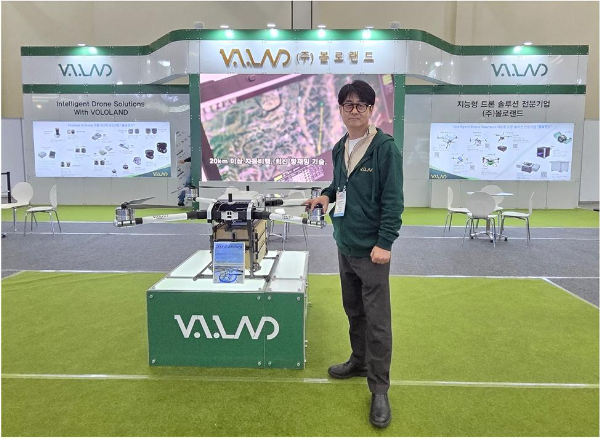
▲ CEO Ahn Sung-ho
Industrial Changes Brought by Localization
The emergence of 100% localized agricultural drones is expected to bring various changes across the industry. First, supply chain stability will be greatly improved. As it becomes possible to produce core components domestically, a stable production system that is not affected by external variables can be established. Positive effects are also expected in terms of technological competitiveness. By securing core technologies independently, it becomes possible to improve product performance and advance technologies, and in the long term, a foundation for securing competitiveness in the global market can be established. In addition, efficiency in maintenance and repair will improve. Since component supply becomes easier and technical support can be provided more quickly, operational stability will also improve.
Expansion of Localization in Line with Changes in the Policy Environment
Recently, policy discussions at the government level regarding the expansion of domestically produced drone usage have been actively taking place. Measures such as encouraging the use of domestic equipment in public projects or granting additional points for the use of domestically produced components are being reviewed in order to secure national security and industrial competitiveness. Such changes in the policy environment are expected to have a positive impact on the spread of localized agricultural drones. In particular, since the agricultural sector is often linked with public projects, significant changes in the market structure are expected if policies expanding the use of domestic equipment become a reality.
Expansion of Field Applications… Securing Competitiveness Based on Demonstration
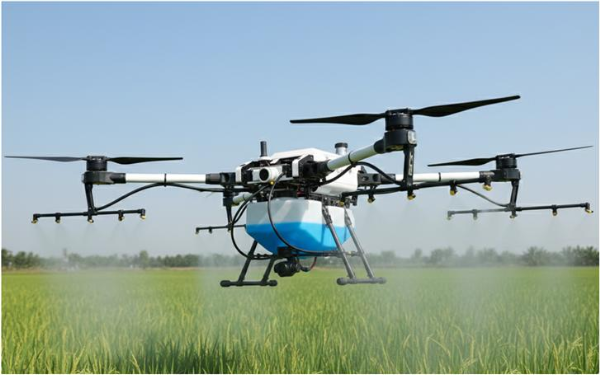
If 100% localized agricultural drones are fully commercialized, the scope of field application is expected to rapidly expand. In particular, they are likely to show high usability in various agricultural fields including pest control operations, crop growth condition analysis, and precision agriculture data collection, and there is a strong possibility that they will secure sufficient competitiveness in terms of performance and operational efficiency compared to existing foreign-made equipment. In addition, as customized designs optimized for the domestic agricultural environment become possible, advanced operations that respond to regional crop characteristics and cultivation methods are expected to become feasible. The industry believes that once localization is fully realized, practical field-centered competitiveness will be strengthened through improved maintenance efficiency and stable component supply.
Expanding Opportunities in the Global Market
Localized agricultural drones also possess the potential to secure competitiveness not only in the domestic market but also in the global market. Recently, as movements to reduce dependence on specific countries have been spreading mainly in the United States and Europe, securing alternative supply chains has emerged as an important issue. Amid this trend, VOLOLAND’s drones based on fully localized technology are highly likely to emerge as a new alternative.
The Starting Point of Industrial Transformation… The Meaning of Localization
Experts believe that if 100% localized agricultural drones are successfully realized, they are likely to be evaluated not merely as an achievement in product development, but as a decisive turning point in transforming the structure of the domestic drone industry. This is because the domestic drone industry, which has relied on foreign technologies until now, can transition to a self-technology-based structure and enter a stage where it secures both technological leadership and industrial competitiveness simultaneously. In particular, if technological internalization is achieved from core components to the entire system, autonomy in all areas including future product development, performance improvement, and securing price competitiveness is expected to greatly expand. VOLOLAND CEO Ahn Sung-ho stated, “As the agricultural drone market continues to grow, if a competitive structure based on localization technologies is formed, opportunities for domestic companies to enter the global market are also expected to expand significantly.” NM